Loading...
Serving Bay City, MI and surrounding areas. (989) 414-6750
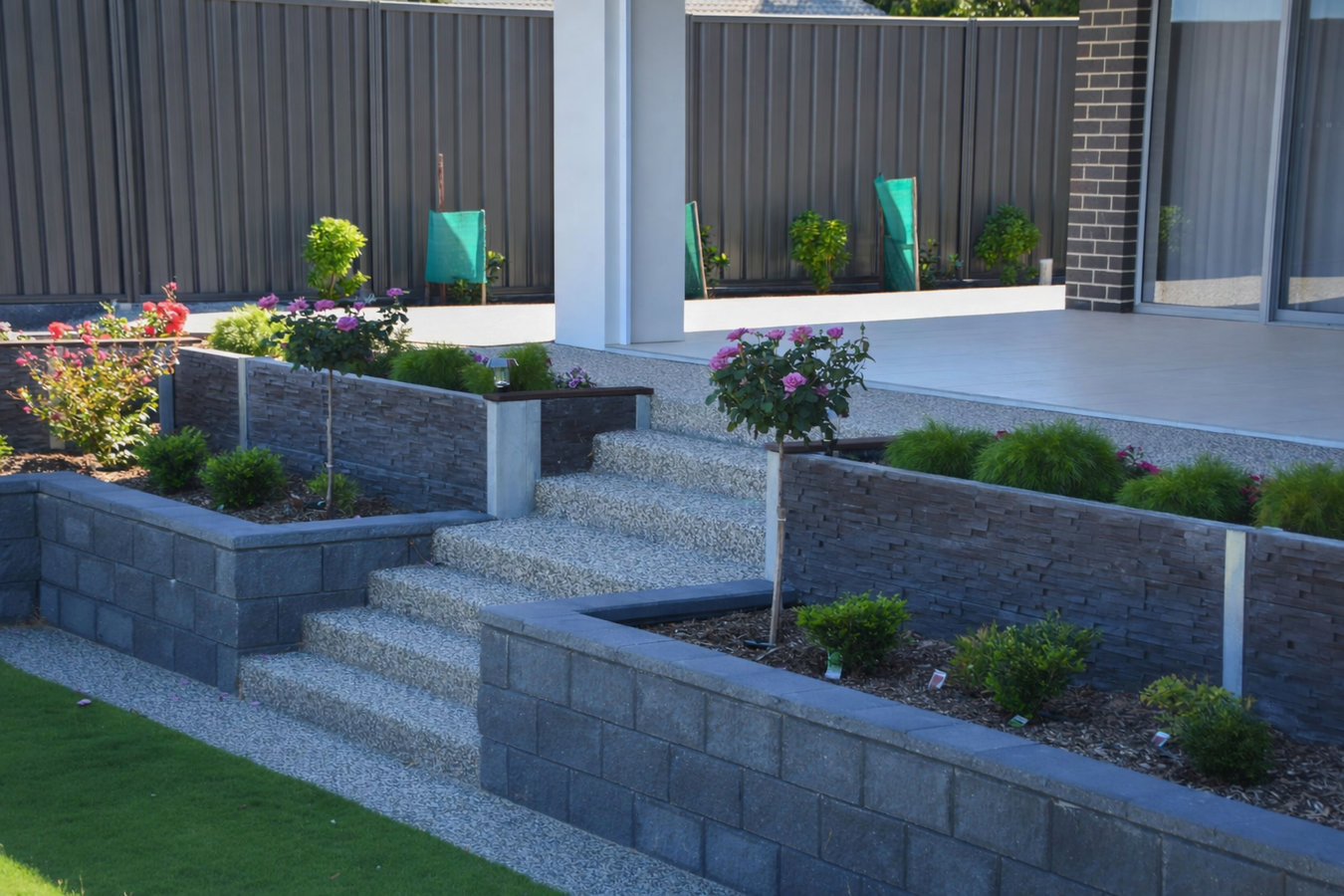
A sloped yard that loses soil every spring, an old wall that tilts a little more each winter - these are fixable problems. We build concrete retaining walls with the footings and drainage Bay City soil demands.
Concrete retaining walls in Bay City hold back soil on a slope or hillside to prevent erosion and create usable flat space, with most residential jobs taking two to five days on-site plus about a week of curing before the area can return to normal use.
If you have a sloped yard that loses topsoil every spring or an old wall that leans more each year after winter, a new concrete wall solves both problems at once. Bay City sits on dense clay soil that holds water and pushes hard against anything holding it back - which is why drainage is built into every wall we pour, not added as an afterthought. If you are also thinking about steps or level changes in your yard, our concrete steps construction work pairs well with retaining wall projects.
Taller walls - generally anything over four feet - require a permit from the City of Bay City, and we handle that process for you. A permitted and inspected wall also protects you if you ever sell the home.
Bare patches forming on a hillside, or mulch and topsoil washing down onto your driveway after a rainstorm, are signs the slope is eroding. Bay City gets meaningful spring rainfall, and without something holding the soil in place, that erosion gets worse every year. A retaining wall stops the cycle by giving the soil a firm boundary it cannot move past.
If an older wall on your property is visibly tilting away from the slope it holds, or if you can see horizontal cracks running across it, the wall is under stress it can no longer handle. In Bay City's clay soil, this typically happens because water has been building up behind the wall for years with nowhere to go. A leaning wall does not fix itself.
If a wall that looked straight last fall is now uneven in early spring, or sections have popped forward, that is frost heave at work. Bay City's freeze-thaw cycles are hard on any structure not built with deep enough footings. One winter of movement is a warning. Two or three winters of movement means the wall is failing.
If part of your yard is too steep to mow safely or too uneven for furniture, a retaining wall can change that. By holding back the upper slope, a wall creates a flat terrace below it - space you can actually use for a patio, garden, or play area. This is one of the most common reasons Bay City homeowners invest in a new wall even when nothing is failing yet.
The most common request is a poured concrete retaining wall for a residential slope or a yard with drainage problems. Poured concrete gives you a seamless, solid structure that resists the kind of shifting and cracking that older timber or block walls develop over time. Every wall we build includes gravel backfill and a perforated drain pipe behind it - because in Bay City's clay soil, drainage is not optional. For projects that involve finished basement spaces or interior slabs adjacent to the wall work, we also offer concrete floor installation so you can handle both scopes under one contractor.
Some homeowners prefer concrete masonry unit (CMU) block walls for their versatility in tight or irregularly shaped yards. Block walls can be built in sections, are easier to access for drainage work, and finish cleanly. Whether you need a short decorative garden wall or a taller structural wall holding back a steep slope, we assess the site first and recommend what makes sense for your specific conditions - not a one-size approach.
Best for homeowners who want a seamless, long-lasting structure that holds up through decades of Bay City freeze-thaw cycles.
A good fit for irregular yard shapes or smaller decorative walls where flexibility in layout matters more than a monolithic pour.
Walls built with gravel backfill and perforated drain pipe from the start - the right choice for any yard with clay soil or water pressure issues.
Multiple shorter walls stepped up a slope to create usable flat terraces - turns an unusable hillside into actual outdoor living space.
Bay City sits on glacially deposited clay soil left behind thousands of years ago. Clay does not drain - it holds water like a sponge. That trapped moisture is exactly what pushes hardest against a retaining wall, and it is the main reason walls in this area fail faster than in regions with sandier soil. A wall built here without proper drainage behind it is working against the local geology from day one. The American Concrete Institute has published guidance on drainage requirements for concrete walls specifically because hydrostatic pressure is a leading cause of premature failure. We follow those standards on every job.
The freeze-thaw cycle here is the other major factor. Bay City's ground freezes to around 42 inches in a typical winter, and a footing that does not go below that depth will heave, tilt, and eventually fail. Many of the homes in Bay City's older residential neighborhoods were built with walls that predate modern footing standards - which is why spring wall replacements are common every April and May. We serve homeowners across the area including Essexville and Auburn - communities that share Bay City's clay soil and winter conditions.
Tell us about the wall - approximate size, location, and what you are trying to accomplish. We reply within one business day to schedule a free on-site visit. No commitment required to get a written estimate.
We walk your yard, look at the slope and soil, check how water currently moves through the area, and measure the wall. You receive a written estimate - including whether a permit is required and what drainage will be installed - before you decide anything.
If your wall is taller than four feet, we submit the permit application to the City of Bay City - typically a one-to-two week process. Before any digging starts, we contact MISS DIG 811 to have underground utilities marked, as required by Michigan law.
We dig below the frost line for the footing, pour and cure the footing, build the wall, install gravel and drain pipe behind it, then backfill and clean the site. Concrete needs roughly a week before the area returns to normal use.
Free on-site estimate, written quote before any work begins, permits handled for you.
We dig below the 42-inch frost line on every wall we build in Bay City. That is non-negotiable here. A wall with a shallow footing looks fine for a season or two and then starts leaning - and that repair costs more than getting it right the first time.
We install gravel backfill and a perforated drain pipe behind every wall - not as an upgrade, but as a standard part of the job. In Bay City's clay soil, water management is the difference between a wall that lasts 40 years and one that fails in five.
We handle the City of Bay City permit application start to finish and schedule the required inspections before we call the job complete. You get documentation showing the work was done to code - which matters when you sell the home or make a claim.
Every project starts with an in-person site visit and a written quote before any work begins. The Portland Cement Association notes that in-person assessment is the only reliable way to price a retaining wall correctly. We agree - and we stand behind the number we give you.
Every one of these points comes back to the same thing: a wall that holds up through Bay City winters without you having to call us back. That is the standard we build to, and it is what separates a wall that lasts from one that does not.
New basement and interior concrete floors poured with vapor barriers and proper subbase prep for Bay City's high water table conditions.
Learn MorePoured concrete steps built to complement retaining walls and level changes - a natural pairing for tiered yard or entryway projects.
Learn MoreSpring scheduling fills fast after Bay City winters - get your free on-site estimate on the books now.